

Managed Hosting
Die Anwendung läuft auf unserer Infrastruktur. Wir übernehmen Bereitstellung, Updates, Überwachung, Sicherung und Wiederanlauf.
Betrieb aus einer HandApplications, models and hardware under understandable control.
We operate applications and local AI on our own infrastructure in northern Germany. Together we clarify model choice, data paths, GPU and storage needs, monitoring, recovery and ownership.
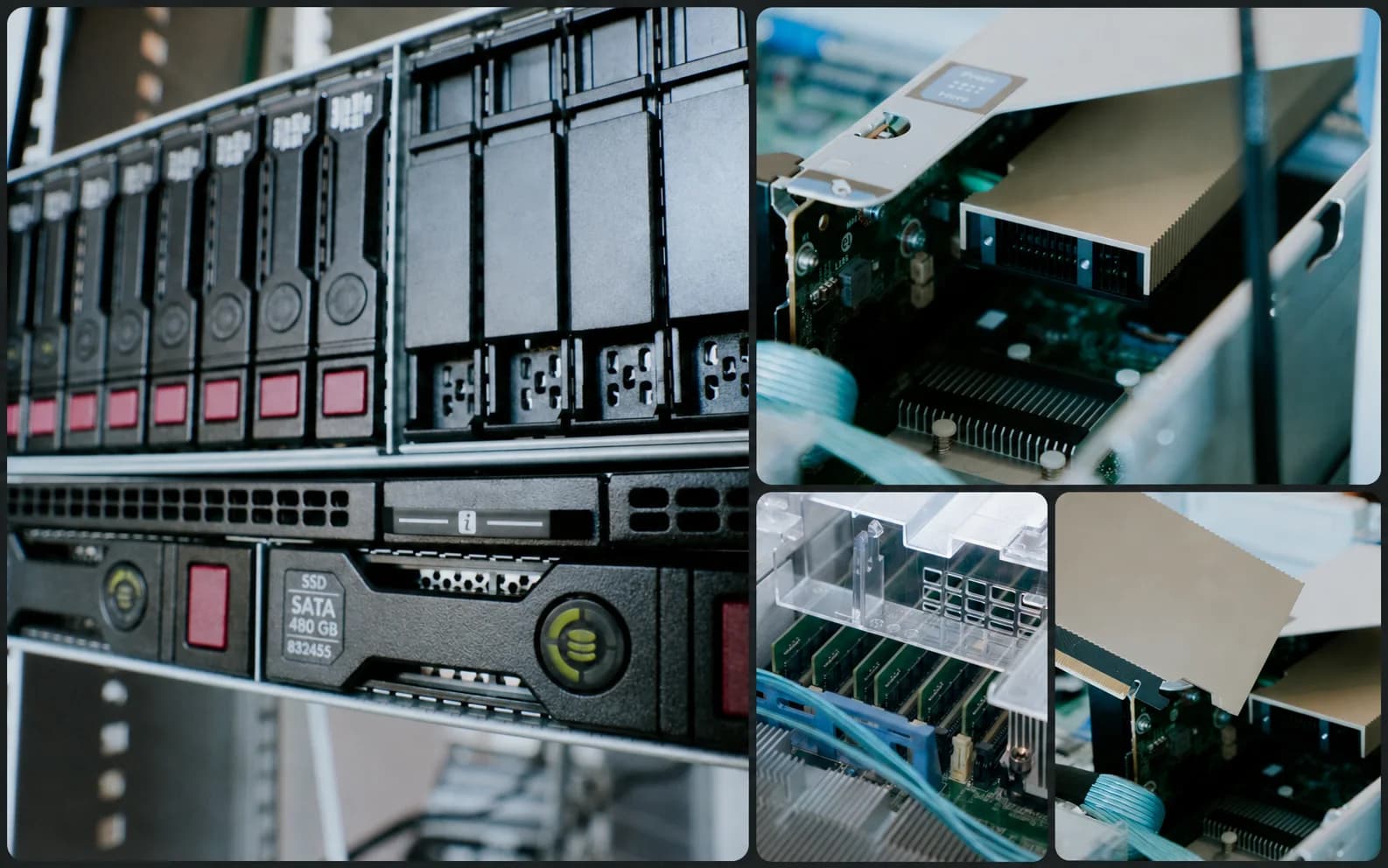
We start with the workload, data, risk and responsibility before deciding where systems should run.
Teams want to use AI, but data paths, logs, external administration and model changes are not clear enough.
A model runs on a workstation, but load, permissions, monitoring, versioning and recovery are not defined.
During incidents, responsibility moves between software, hosting, model and hardware although users only need a working workflow.
Data, configuration, models and logs need to remain transferable before the first productive dependency is created.
Unsere Infrastruktur steht am selben Standort wie unser Büro im IZET Innovationszentrum. Im Fehlerfall beginnt die Arbeit deshalb nicht mit der Suche nach einem anonymen Zuständigen.
Vor dem Umzug klären wir Abhängigkeiten, Wartungsfenster, Wiederanlauf und Rückweg. Danach bleiben Überwachung, Sicherung und dokumentierte Zuständigkeiten Teil des laufenden Betriebs.
Standort und Housing ansehenDie Anwendung läuft auf unserer Infrastruktur. Wir übernehmen Bereitstellung, Updates, Überwachung, Sicherung und Wiederanlauf.
Betrieb aus einer HandSprachmodelle, Vektorsuche und sensible Wissensbestände laufen in einem kontrollierten Betriebsraum mit klaren Rollen und Datenwegen.
Modelle und Daten unter KontrolleDeine eigene Hardware steht im Rack. Strom, Netz und geregelter Zugang kommen von uns, die Maschine bleibt deine.
Eigene Hardware im IZETSensible Systeme laufen bei uns, weitere Dienste dort, wo es technisch und wirtschaftlich sinnvoll ist. Die Übergänge werden bewusst abgesichert.
Für gewachsene LandschaftenWe connect application, infrastructure, local AI, security and recovery. You know where data lives, who is responsible and what happens during an incident.
Compute, storage, networking, certificates, logs, updates and recovery are planned as part of the application. Operations are not an afterthought.
Language models, vector search and internal knowledge stores receive explicit data paths, roles, quality limits and traceable logs.
If your machine belongs in the rack, we clarify power, cooling, access, networking, responsibility and the path back to your own environment.
Sensitive systems remain local or with us, other services run where cost, availability and integrations fit better. The boundary is secured deliberately.
Segmentation, secrets, backup, patch level, roles and alerting are considered together. The result does not need to be hardened after launch.
GPU, model size, latency and storage are tested with representative requests. The best fit is decided by measured usefulness, not by model size.
Good infrastructure does not start with hardware. It starts with data, models, latency, failure impact and responsibility for a concrete workflow.
Application, model, data classes, latency, utilisation and failure impact are assessed using real cases.
Who may see what, what is logged, which data leaves the system and which approvals are required.
Managed hosting, local AI, co-hosting or hybrid setups are compared by protection need, cost and responsibility.
Network, permissions, certificates, models, backups, recovery and monitoring are tested before production.
Updates, model changes, utilisation, alerts and recovery stay visible and are reviewed regularly.
Production is sensible only when purpose, data paths, load profile and recovery work together.
We assess infrastructure decisions by whether they improve control, quality, recovery and operating responsibility.
For limited domain tasks, measured quality, data control, latency and total cost matter more than using the largest available model.
Documents, permissions, updates, source visibility and deletion paths have to remain connected with the model operation.
Location, administrator access, model exchange, export, energy use and hardware demand are becoming concrete procurement criteria.
Application, model, data classes, latency, utilisation and failure impact are assessed using real cases.
Permissions, logs, storage locations, provider access and deletion paths are made explicit.
Managed hosting, local AI, co-hosting or hybrid setups are compared by need, cost and responsibility.
Network, certificates, permissions, models, backups and monitoring are tested before production.
Updates, model changes, utilisation, alerts and recovery stay visible during operation.
You know which content reaches the system, which logs are created and who can access them.
Model size, GPU needs and cost follow the task instead of a product promise.
During incidents, we can work directly on the systems instead of starting with an anonymous ticket queue.
Data, configuration, models and hardware remain available through a documented handover and recovery path.
Practical answers before infrastructure, model or migration decisions are made.
No. Purpose, data, permissions, logs, model origin, updates and human control still need to be assessed technically and organisationally.
Yes. Co-hosting and hybrid setups are planned around rack space, power, cooling, network, access, utilisation and operating responsibility.
We test model size, quantisation, context, parallel use and latency with representative tasks before hardware is committed.
Yes. Sensitive workloads can stay local while other services run where cost, availability and integration make more sense.
Monitoring, alerting, backup, recovery order and responsible contacts are defined before production. Recovery is tested, not only described.
Define data, model, quality and responsibility before production.
Explore insightsKeep sources, permissions and deletion paths connected with retrieval.
Explore insightsBring own hardware into a controlled operating environment.
Explore insightsTest application, data and AI dependencies as one chain.
Explore insightsWe clarify workload, data paths, hardware, model choice, monitoring and recovery. Afterwards you know which setup carries the risk, cost and responsibility.